
You Don’t Have a Designer Problem. You Have a Planning Problem.
The layout is usually where the problem becomes visible. The real break often happened earlier: no clear priority, no audience decision, no owner, and no agreement on what the piece has to do.
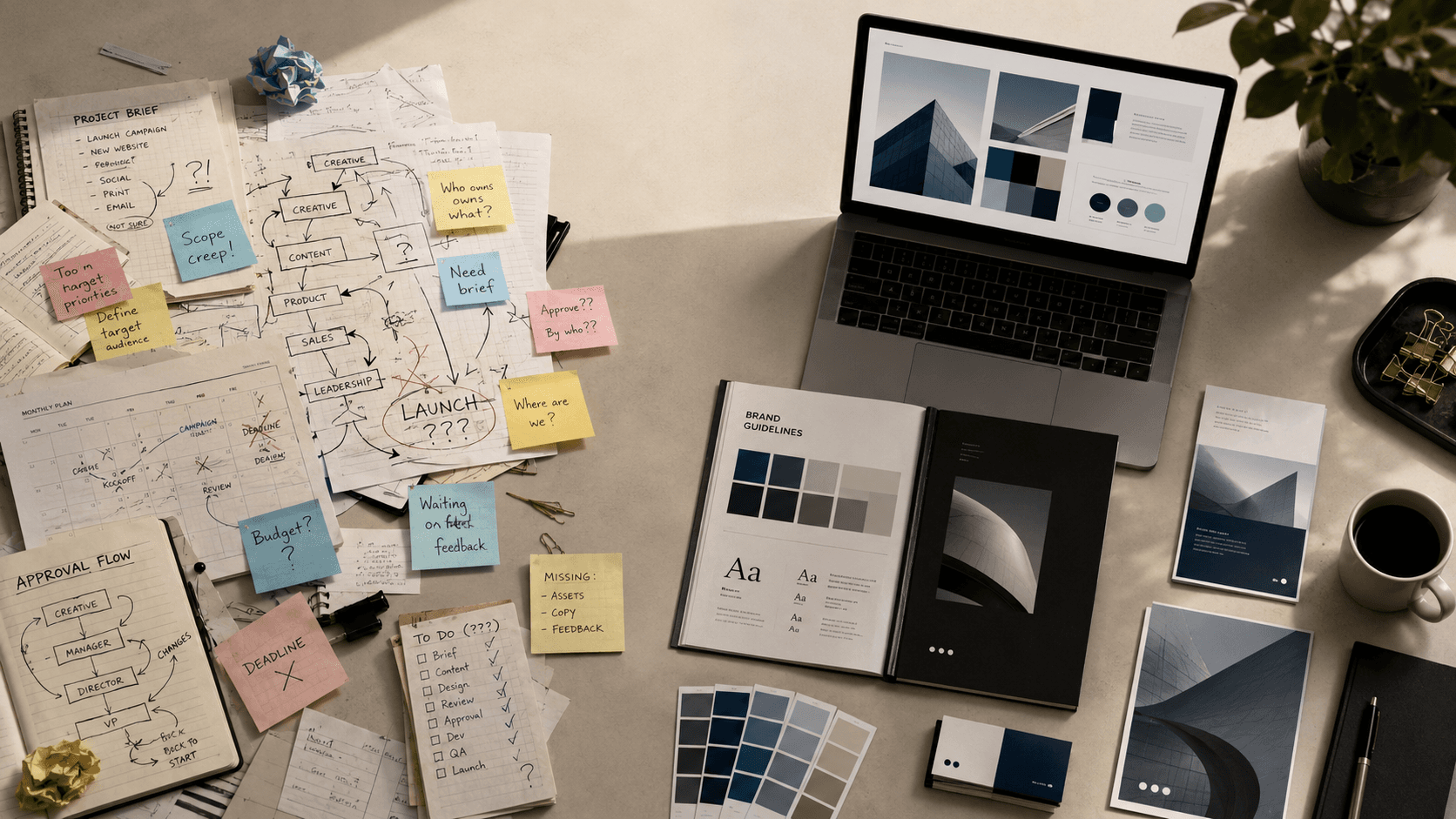
A design request usually arrives after a lot of quiet decisions have already failed. The team knows something needs to look better, but the file is being asked to solve more than layout. It is being asked to choose the message, rank the priorities, calm the stakeholders, and make the business feel organized.
That is why the fifth round of revisions can still feel like the first. The design is moving, but the decision underneath it has not changed.
The layout is not the first decision.
A layout can make a clear idea easier to see. It cannot decide which offer matters most, who the piece is for, or what the audience is supposed to do next. When those things are vague, every version looks almost right and still feels wrong.
The work gets easier when the first conversation is not about colors, comps, or examples. It is about the job the piece has to do.
Design can clean up a message. It cannot invent the decision the team avoided.
What usually breaks first
Most creative rework starts with one of four gaps: no agreed priority, no clear audience, no owner for the final call, or no definition of done. Those gaps create small disagreements that show up as design feedback.
“Can we make it pop?” may really mean the offer is buried. “It feels off brand” may mean the team has no shared brand standard. “Can we see another version?” may mean nobody wants to choose the tradeoff.
A better brief is not a bigger brief.
The useful brief is not the longest one. It is the one that names the real job, the audience, the decision-maker, the constraints, and the few things the work must not lose.
That kind of brief gives the design somewhere to go. It also gives feedback a place to land. Instead of reacting to taste, the team can ask whether the work is doing the job it was built to do.
Before you ask for another layout
Pause long enough to name what is actually unclear. Is the audience wrong? Is the offer too crowded? Is the hierarchy trying to serve three goals at once? Is the decision path fuzzy?
When the planning gets cleaner, the design has less to fight through. The work can still be beautiful, but it no longer has to pretend beauty is the strategy.
Make the decision before you judge the design.
- 01
Name the job before opening the file.
- 02
Separate taste feedback from business decisions.
- 03
Give one person ownership of the final call.
- 04
Decide what done means before the review starts.
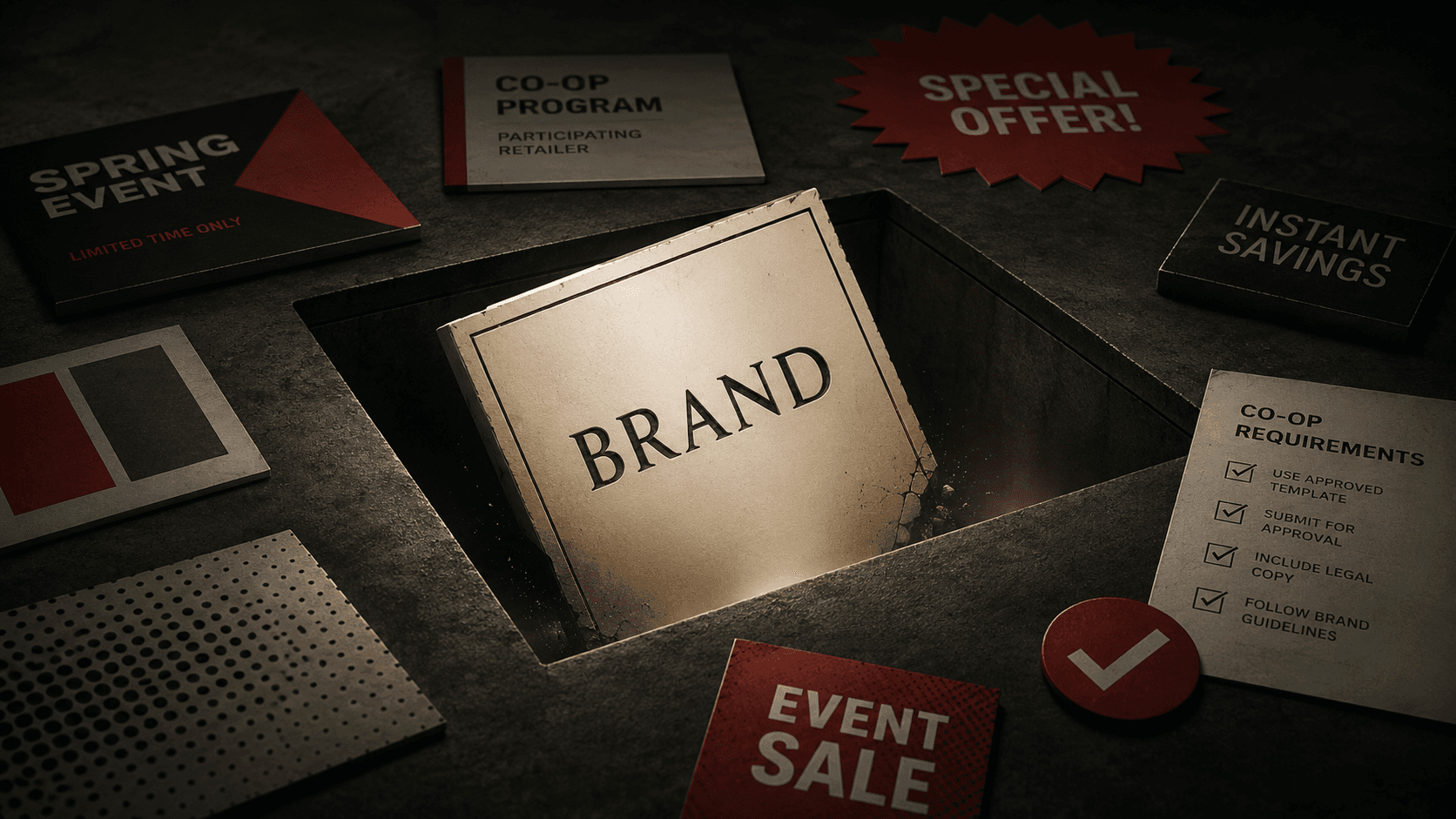
The Co-op Creative Trap
How vendor-funded campaigns get fragmented when nobody owns the customer experience.